
The Human View™ Blog

Employee Engagement — But In What?
I've been grappling with "employee engagement" for years.
I remember a specific meeting where it came to a head. We were the wellness and disease management vendor. Across the table sat the consultant and the client. They weren't happy, and they kept pressing us: "What are you going to do to get more of our people engaged?"
So we did what vendors do. We talked about our outreach. Our email campaigns. Our incredible portal. Our text messages.
They still weren't happy. The tone kept escalating.

Finally, in exasperation, I said: "Well, what are YOU going to do to get more of your people engaged? You've got them forty hours a week, and you write their paychecks. If YOU can't get them to engage, how are WE supposed to?"
The room went silent. I had an immediate moment of regret — oh, I've really done it now.
Instead, the tension broke. The consultant and the client looked at each other, smiled a little sheepishly, and the consultant said, "You raise a valid point."
And then the meeting got good. We stopped assigning blame and started talking about partnering.
The argument was never about the word
Everyone in that room knew exactly what we meant by engagement. We meant the health management program — were people enrolling, completing, coming back. No ambiguity.

What we were actually fighting about was ownership. They thought engagement was something we produced with campaigns. For a while, I did too. In that moment, though, I realized it was something no vendor could manufacture alone. And the reason my outburst landed instead of blowing up the meeting is that everyone else recognized, in that moment of silence, that I was right about something uncomfortable: whatever we did with emails and texts was operating on top of a relationship we had no part in building.
Look at what I'd actually said. Forty hours a week. You write their paychecks. That's not a claim about program design. That's a claim about the employment relationship — and I made it without realizing I'd changed the subject.
The meaning trap
Nowadays the whole benefits industry uses "engagement" as short-form for benefits program engagement. It's easy to understand why — it's what we're all working on, all day. But the shorthand walks us straight into a meaning trap, because there's already a well-established discipline that owns that word, and it's measuring something else entirely.

When Gallup says engagement, they mean the strength of the relationship between an employee and their employer. Their Q12 instrument has asked versions of the same twelve questions for decades — Do I know what's expected of me? Do I have the materials I need? Does someone here care about me as a person? Have I had opportunities to learn and grow? — stacked into a hierarchy where each level rests on the one below it. Rigorous, validated across millions of responses, and not remotely the thing I was hired to move.
Two different questions, one word:
Employee engagement asks whether your people are invested in working here.
Benefit program engagement asks whether the thing you bought is reaching the people you bought it for.
They're related — that was the real content of my outburst — but they are not the same, and the conflation costs everyone. It costs the employer, who asks a vendor to move a number the vendor doesn't own. It costs the vendor, who answers with sends and opens because those are the only numbers they control. And it costs the employee, because while everyone argues about whose fault the number is, nobody asks what would have to be true for this person to actually use this benefit.
The gap
Gallup gave employee engagement a shared yardstick. Two employers can compare scores and mean the same thing by them.

Benefits has nothing comparable. We have participation rates defined differently by every vendor, comparable to nothing, and silent on whether the benefit did anything for anyone.
I don't think that's a small problem. I spent 22 years as a consultant/broker, which overlapped a bit with 15 years in well-being and health management, and the past 11 focused on benefit program engagement - and I've just been saying "employee engagement."
The last question
When someone in your world says "engagement," do you know which kind they mean? And if we're going to measure benefit program engagement honestly — not sends and opens, but whether the benefit actually found the person who needed it — and motivated them at least to enroll — what would you want that measure to capture?
~ Mark Head
© 2026. All Rights Reserved.
Aspirations
"The simple, almost embarrassing reality is that we feel too busy to search for meaning."
~ Tony Schwartz
Set a 15-minute call
Set a 30-minute call

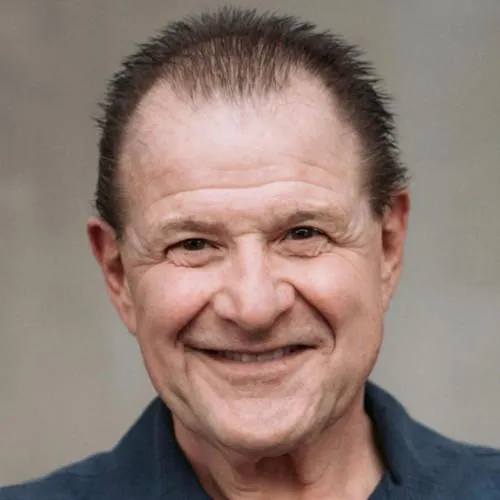
Mark Head
President
With 4 decades of combined experience in employee benefits consulting, wellness and health management, Head brings a unique combination of dynamic perspectives into a clear vision of where the future of health care is moving - and it's moving towards deeper human connection, awareness, and engagement...
Follow Us On
© 2025-2026 Benefit Personas, LLC. All Rights Reserved.