
The Human View™ Blog
The Apprenticeship Gap
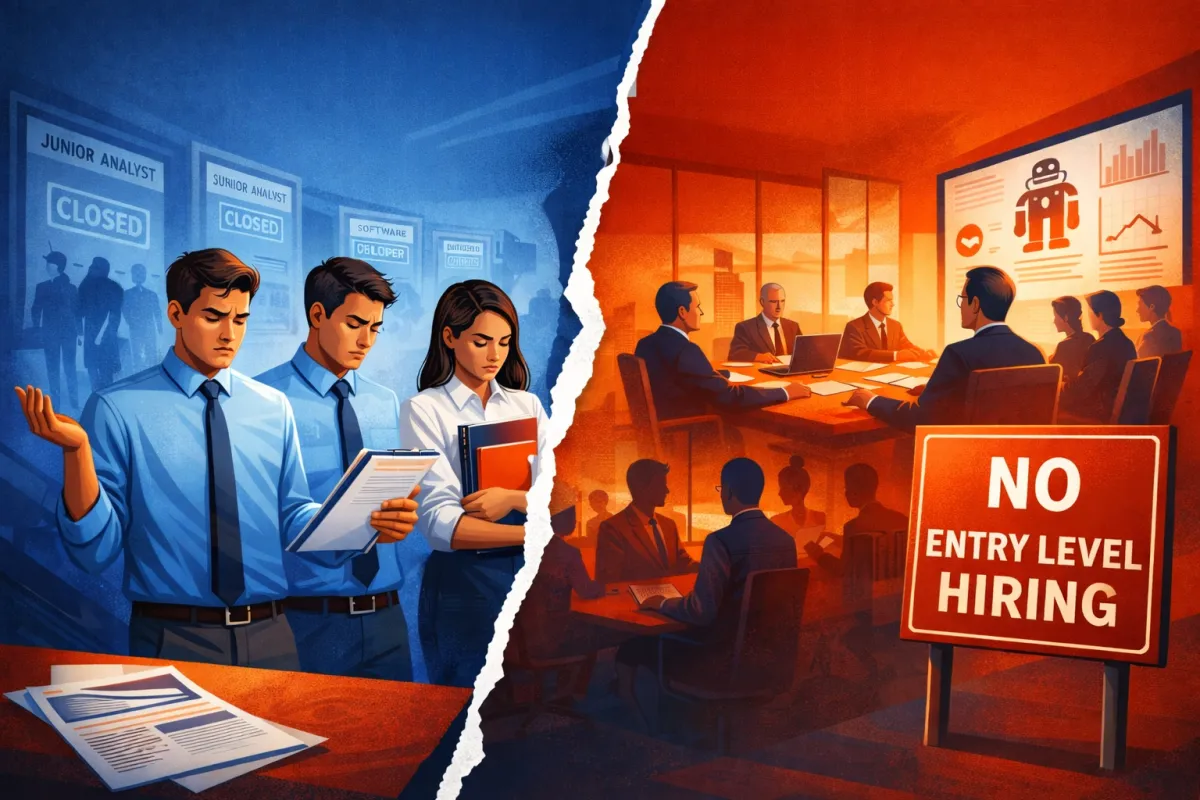
The quiet labor-market break that most benefits professionals still aren’t modeling isn’t a “jobs recession.” It’s an apprenticeship gap: employers are keeping (and augmenting) senior roles while not creating the entry-level roles that historically trained the next layer of talent.
You can see it only when you decompose by age + occupation exposure, not in aggregate unemployment. A Stanford-based analysis using ADP payroll microdata finds workers ages 22–25 are experiencing materially weaker employment outcomes in the most AI-exposed occupations, while older workers in those same occupations are steady or rising. The Dallas Fed, using CPS-based approaches rather than payroll files, reports a consistent direction: young workers are losing ground in highly AI-exposed jobs, suggesting something more structural than “normal” churn. Meanwhile, job-posting intelligence points to the transmission channel: entry-level demand is collapsing relative to non-entry-level since early 2023.

For employee benefits, the risk isn’t academic. It’s operational.
Impact on group health plans
This kind of workforce composition shift will change utilization and affordability in addition to who's covered. If entry-level career pathways narrow, more 20-somethings land in gig/contract/temporary arrangements or take “bridge jobs” that don’t offer benefits (or offer thin benefits). The BLS has documented the scale and categories of alternative work arrangements in its Contingent Worker Supplement; this is the bucket many “degree holders driving Uber” fall into.
In practice, that pushes employers toward:
Smaller inflows of young, generally lower-utilizing members into the plan (especially in white-collar orgs that historically hired cohorts).
Higher dependent coverage pressure (more late-20s/early-30s adults staying on a spouse’s plan or never transitioning to their own), reinforcing multigenerational “failure-to-launch” dynamics that are already measurable at the household level.
Rising affordability friction at exactly the moment employer plan costs remain elevated (premium trend, deductibles, worker contributions). The KFF 2025 Employer Health Benefits Survey is the baseline reference most consultants already use for this cost reality.

The subtle but important point: this isn’t just “more stress.” It’s a different risk pool trajectory—fewer early-career entrants with stable wages and benefits progression, more churn between employer coverage, marketplace coverage, Medicaid eligibility, and uninsured gaps.
Impact on consultants and brokers
Consultants are going to get pulled into this whether they want to or not, because employers will feel it as:
Retention instability (junior talent can’t get in; mid-level talent gets bid up; internal mobility becomes brittle).
Manager load and burnout as fewer juniors handle the “learning-stage” work that used to absorb volume.
A new kind of productivity paradox: “We automated tasks” but “we can’t build bench strength.”
That’s not an HR-only issue. It shapes:
plan eligibility design and waiting periods,
part-time vs full-time mix,
dependent verification and family coverage strategy,
and the “why aren’t employees engaging?” problem—because a growing slice of the workforce is financially stressed, underemployed, or transient.

If you want a single indicator that captures the lived reality behind the headline unemployment rate, the NY Fed’s tracker is blunt: recent college graduate underemployment hit 41.8% (2025 Q3).
Impact on voluntary benefits
Enrollment and decision-support firms tend to assume a steady cadence of “new hires + annual OE.” Apprenticeship severance disrupts both:
fewer true “career-track” new hires,
more nontraditional worker categories,
and more households where the benefits decision is effectively a family portfolio decision (spouse plan vs your plan vs marketplace).
VB uptake becomes less about clever product positioning and more about solving volatility: income volatility, coverage volatility, and identity volatility (“I thought I was entering a profession; I’m patchworking gigs”). That pushes demand toward offerings that mitigate short-term shocks (hospital indemnity, accident, critical illness) and toward communication models that can speak credibly to a workforce experiencing structural uncertainty—without sounding like more corporate noise.

The last word
The core thesis for the benefits ecosystem is simple: when AI substitutes for “learning-stage” work, the downstream effect is not just job displacement—it’s talent formation failure. And when talent formation fails, employer-sponsored benefits don’t just get more expensive; they get harder to design, harder to communicate, and harder to stabilize.
~ Mark Head
© 2026. All Rights Reserved.


Mark Head
President
With 4 decades of combined experience in employee benefits consulting, wellness and health management, Head brings a unique combination of dynamic perspectives into a clear vision of where the future of health care is moving - and it's moving towards deeper human connection, awareness, and engagement...
Follow Us On
© 2025-2026 Benefit Personas, LLC. All Rights Reserved.