
The Human View™ Blog

The Bandwidth AI Will Give Back - Pt. 2 (HM)
A version of this piece was first published in Voluntary Benefits Voice, the monthly publication of Voluntary Advantage.
In Part 1 of this post, we noted that "customization creates snowflakes." That no company can scale while they’re also trying to manage the snowfall.
And that there are 3 key trends across the benefits world within which AI is expressing, shall we say... differently?
First-the leverage-point for systems is moving from “who controls the data” to “how sophisticated and flexible is the configuration?”

Second-decision support (DS) is migrating beyond the O/E window.
Third-software is starting to act, not just inform.
And we looked at how those trends are the VB world. Standardize to configuration, with true customization needs to be scoped and charged separately for, and you’ll have a documented, manageable engine where the client-specific nuances don’t live only in the brains of the account team!
Let's move on to token budgeting, and then wrap up.
How much is this costing us?
The enterprise conversation about AI is shifting from “is this useful?” to “where is it actually worth the money?” The token is becoming the operative cost unit, and the uncomfortable part is that a rising AI bill can mean real work is getting done — or it can mean the system is thrashing: re-reading context an AI assistant should already remember, retrying, or reaching for a frontier model on a task that doesn't need graduate-level compute. Anyone who's re-explained the same background to a chatbot for the fourth time has felt a version of this firsthand. At enterprise scale, that kind of friction tends to show up eventually as a real, and rising, line item.
For health management programs, that shift is likely to surface less as a budget line and more as a quiet test of whether the always-on layer actually holds up under real use.
Health management has long competed on the promise of continuous, personal attention — a human (or digital) coach or care manager - who remembers a member, follows up, and shows up at the right moment. That promise is now also exactly what AI assistants are being built to make, and it comes with a version of the same operating economics human programs have always carried: every interaction costs something to deliver.
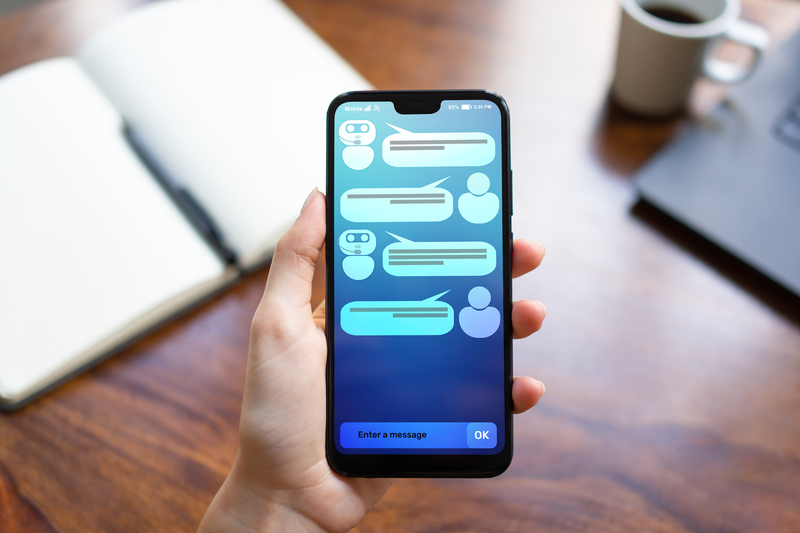
The member journey / experience
The risk worth watching for is a hybrid model that quietly costs more than it should — an assistant that forgets a member between touchpoints, or that has to hand the same context to a human coach repeatedly because nothing persisted from the prior conversation. That's not just a member-experience issue at that point; it becomes a real cost, and it lands on whoever operates the program.
This also touches the boundary-blurring raised in Part 1, between where a carrier's decision support ends and a health management program's guidance begins. If both layers are running AI-assisted interactions on the same member, without much coordination, the redundant cost of two systems asking a member to re-explain the same thing is a fairly avoidable one — and arguably one of the more visible near-term signs of whether that coordination is actually happening.
So, sure, there's a cost for a decision support tool to provide a recommendation, but there's also an additional cost if the well-being program's "outreach" asks the same basic question. Worse, though, is the degradtaion of the user experience.
The last word

The differentiation question raised in Part 1 — where a program out-values an always-on assistant — gets a second, more concrete layer here: whether a hybrid model can be shown to be reasonably cheap to run per member-interaction, not just effective per member-outcome. Programs able to speak to that with real numbers seem likely to have an easier renewal conversation than ones relying mainly on the intuitive case for “real people.”
None of this argues against the hybrid model itself, which still looks like the right direction. It argues for treating cost-per-interaction as a metric worth tracking deliberately, alongside the more familiar outcome measures a health management program already reports on.
~ Mark Head
© 2026. All Rights Reserved.



Mark Head
President
With 4 decades of combined experience in employee benefits consulting, wellness and health management, Head brings a unique combination of dynamic perspectives into a clear vision of where the future of health care is moving - and it's moving towards deeper human connection, awareness, and engagement...
Follow Us On
© 2025-2026 Benefit Personas, LLC. All Rights Reserved.