
The Human View™ Blog

The Personalization Deficit

At 48 pages, the 2026 Gallagher Employee Communications Report has a lot of depth. The report cites a "personalization deficit" as a defining gap: fewer than 1 in 5 organizations are satisfied with their ability to personalize communications, and 77% do not regularly use audience profiling techniques such as personas. Strategic ambition runs ahead of execution — 73% of teams aspire to operate as strategic partners, only 18% do.
Notably, 87% of organizations cite line manager communication capability as a moderate or significant risk — yet only 21% actively equip managers with toolkits. "Audience burnout" ranks as the #1 universal risk (81% impact), driven by communication volume that outpaces relevance.

The buried workforce
They go on to explore the broad prevalence of a workforce buried under irrelevant communication — and, importantly, the survey points cleanly to what's missing...
They ask their survey participants: "To what extent does your function formally segment internal audiences beyond just department or location?" That phrasing — "beyond just department or location" — is the entire frame. They're naming aspects of the demographic ceiling - the upper limit problem - that the entire benefits ecosystem struggles with.
They go on to identify the need for communications teams to go further, specifically the need to capture "employee mindsets." The question that doesn't get fully answered is, "How do we do that?"
For the first 35 years I spent in the business, I couldn't answer that question, either!
I had never heard of any methods to "do that." Then I ran across something that, not surprisingly, had not developed from within the benefits world at all - it had developed in the realm of consumer marketing, advertising, research and analytics.

Bridging the domains
It's called psychographic segmentation in academic and consumer marketing circles. I prefer the term Motivational Profiling, because it's a simpler term for what it does: it captures why people make the decisions they make.
Consider the layers most communicators conflate:
Demographic segmentation asks who someone is: age, role, location, tenure, salary band.
Behavioral segmentation asks what someone has done: clicked, enrolled, attended, opted out.
Situational segmentation asks where someone is in life: new hire, new parent, near retirement, recently diagnosed.
Motivational Profiling asks why someone decides as they do: what they fear, what they value, what they aspire to, what they avoid.

The first three describe identity, action, and context. Only the fourth explains choice. And in benefits — where nearly every meaningful employee interaction is a choice made under uncertainty — the absence of motivational data is the reason engagement campaigns chronically underperform.
The unexpected blueprint
This is where the buzz around choice architecture matters. Employees don't fail to engage with their benefits because they lack information. They fail to engage because the decisions are emotionally costly, the vocabulary is foreign, and the stakes are obscured by a third-party payment system that hides the three core measures of value: price, quality, and fit. Throwing more demographic targeting at an emotionally avoidant audience produces exactly what the Gallagher data already shows — burnout, fatigue, 21% manager toolkit adoption, and that 77% persona vacuum.

We don't need more communication, we need better communication, architected around the motivational reality of the human being who is receiving it. Six recognizable patterns — what I call BenefitPersonas — describe the great majority of how employees actually engage with their benefits. Once you know who you are speaking to in motivational terms, channel choice, tone, manager toolkit, and choice architecture all follow.
The last word
Gallagher has named the deficit. The question for tomorrow is "Do we really care enough to close it?"
~ Mark Head
© 2026. All Rights Reserved.


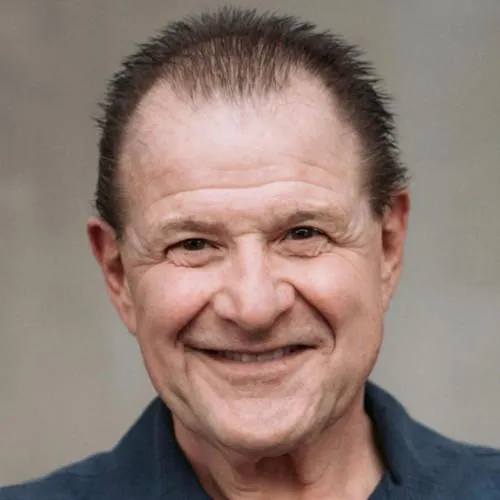
Mark Head
President
With 4 decades of combined experience in employee benefits consulting, wellness and health management, Head brings a unique combination of dynamic perspectives into a clear vision of where the future of health care is moving - and it's moving towards deeper human connection, awareness, and engagement...
Follow Us On
© 2025-2026 Benefit Personas, LLC. All Rights Reserved.