The Human View™ Blog
Sayonara 2025 - and Bonjour 2026!
The headlines this morning are crowing about Q3 GDP running at a 4.3% annual rate - hooray - right?
Yes, and there's always a challenge with projecting quarterly GDP figures onto a full-year frame. The actual GDP growth rate, compounded over the past 4 quarters, was about 2.3%. While that's certainly not "bad," I find it useful to temper "press euphoria."
Lest we have doubts, though, about reality down here on the ground - and turning towards our beloved benefits industry - I found myself resonating with Ed Ligonde's LinkedIn post from late last week: "This season has been a mix of tough renewals, ugly rate increases, anxious HR teams, and a lot of emotion. Some days it feels like we’re the punching bag for things … but it’s ok, it’s what we signed up for, to push a better tomorrow and for a better experience for everyone involved."
Looking back
Indeed, it feels to me like 2025 has been a year of "micro-compounding:"
More tools
More messaging
More employer pressure
More employee confusion
More effort required just to keep outcomes from slipping backward

It's not like whatever constitutes "engagement" collapsed — but it didn’t scale cleanly either. Employer stress has been palpable, and I can feel their weariness in raising sharper, harder questions. The complexity of enrollment conversations also compounded, as even programs that were performing nominally well required more framing and explanation to land. The work got heavier. Why? Because the system itself is carrying more friction than it used to.
Systems under strain...
...behave differently. When systems are at least healthy-ish, effort and outcome tend to track together. When they’re strained, effort increases while clarity declines.
Choices expand faster than people’s capacity to evaluate them. Communication channels multiply without necessarily improving understanding. Platforms add features, but context becomes harder to maintain. So it seemed that, net, "decision support" - for employees - devolved to "what's the minimum payroll deduction burden I can get away with?" And I can't help wondering: "Did we really help close coverage gaps, or did we actually widen them?"
So while it's easy to wonder why things seem to be getting harder and harder, we can move forward - concurrently - by putting more emphasis on which components displayed more "wobble," and asking where and how can we work towards smoothing them out in 2026?”
Getting to pattern clarity; what quietly worked better in 2025
While I certainly haven't "surveyed the industry," my recent conversations with consultants and vendors have seemed to circle around a few key areas:

Reducing cognitive load matters more than adding options. One of the clearest signals from 2025 was that adding “one more benefit” or “one more feature” rarely improved engagement on its own. In many cases, it did the opposite.
What worked better was simplification with intent:
Fewer benefit narratives, framed more clearly
Bundled offerings that reduced decision friction
Conversations focused on why something mattered, not just what it was.
Heading into 2026, there’s value in choosing at least one area where "narrow clarity" is going to matter more than "crossing every T," and deliberately reducing some of the noise there. That payoff is likely to show up, more quickly, in shorter conversations and - hopefully - better decisions.
2. Engagement revealed itself as a motivational problem, not a delivery problem. There have been amazing system-level and operational strides made over the course of 2025, with a lot of them being driven by more focused and facile use of AI.
From core health insurance administration to navigation and advocacy, to health management and point solutions, communication "delivery" improved:
Better messaging went out, more smoothly
Platforms worked more seamlessly
Robust content got produced faster, and deployed with better targeting
Yet, employee response and "engagement continuity" remained uneven
What became harder to ignore was that engagement doesn’t fail because information isn’t available. It fails because motivation isn’t aligned. Approaches that acknowledged different motivational starting points — rather than assuming a single “best” message — consistently performed better. When you do a better job of "meeting people where they are," you don't need to try so hard to be clever.

For 2026, the opportunity isn’t to communicate more often. It’s to communicate with sharper relevance:
Testing tone, not just timing
Segmenting your audiences around why people act: the unique contribution of psychographics
Designing campaigns that respect everyone's limited emotional bandwidth
Even small experiments here should tend to produce disproportionate gains.
3. Strategic "durability" became increasingly important. Durable strategies are those that still work even when people are tired, distracted, skeptical, or only half-paying attention — which, increasingly, is employees' default condition.
While meaningful strides were made in improving the UX - often by improving the UIs, benefit teams (consultants, vendors and employers alike) still struggled actually to deliver better concept and product framing; "behavioral yield" suffered accordingly. Let's face it, it's hard to force people to believe "this is worth your attention" when they're mired in "I don't understand this, and I certainly don't get why I should care."
For 2026, this suggests a shift in how success is evaluated. Instead of just asking whether a program performed well at launch, it may be more useful to ask whether it:
Is designed to support ongoing awareness and use without repeating the basics of "what the thing is" - and how do we measure such?
Continues to be relevant throughout the year, with fewer instances of "buyer's (enrollment) remorse
Makes the next conversation easier, not harder
Put simply, the most durable strategies excel at presenting the right motivational anchor for each product and program, so that ongoing interactions don't keep feeling like a first conversation.

That distinction may well be the make or break pillar in this broad system where attention is scarce and fatigue is cumulative.
The last word
There’s no guarantee (is it even possible?) that the benefits ecosystem will become simpler next year. Many of the forces shaping it sit well outside anyone's direct control. But progress doesn’t require fixing everything at once. It often starts by
Reducing friction in a few well-chosen places
Aligning engagement with motivation, and
Building strategies that continue to rebound
...despite increasingly volatile real-world conditions.
And in a year like the one ahead, that kind of coherence is its own form of momentum.
~ Mark Head
© 2025. All Rights Reserved.


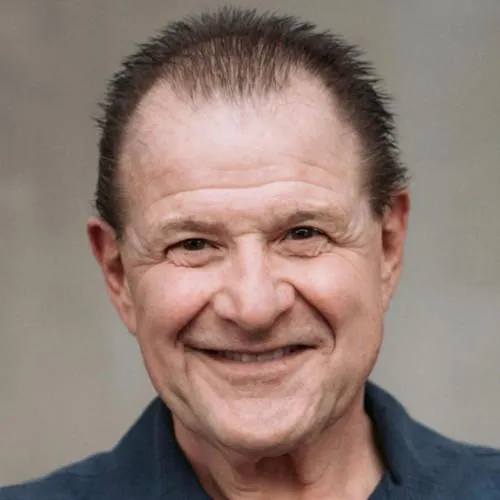
Mark Head
President
With 4 decades of combined experience in employee benefits consulting, wellness and health management, Head brings a unique combination of dynamic perspectives into a clear vision of where the future of health care is moving - and it's moving towards deeper human connection, awareness, and engagement...
Follow Us On
© 2025-2026 Benefit Personas, LLC. All Rights Reserved.