
The Human View™ Blog

Of Inefficiency and Economic Leakage
I remember, many years ago, when I was still a group health insurance consultant/broker, I had an “a-ha” moment: a key reason I was making so much money was that I was a middleman in the middle of an extraordinarily expensive “system” that required deep, abstruse expertise to navigate. Sure, that added a certain kind of “value,” but it wasn’t (and still isn’t) what I’d call foundational value. Most consultants I know would generally agree; they’ve been holding the line inside a system none of us created but that all of us have worked so hard to help make more tolerable for our clients.

What I started noticing back then was that I wasn’t actually creating anything. I didn’t deliver medical services. I didn’t invent insurance products. I didn’t take risk (other than entrepreneurial risk). I didn’t provide administrative services. All I did was “understand how all the craziness of the system was structured,” and help my clients create relatively “safer” pathways through financial, human resource, and health-and-well-being minefields. That work mattered – it still does. But it was also compensating for gaps that the system itself couldn’t – and still can’t – effectively address.
The vise grip of a chaotic system
I made a lot of money. But it took me nearly 20 years to realize I seemed to be adding less and less value. My clients were in pain. And all of us were locked in the vise grip of a chaotic system bludgeoning us, every day – something even worse than “death by a thousand cuts.”
In 1999, every single month, I had to put every single one of my employer clients’ group health plans out to RFP, hoping and praying we might find something a little more efficient, cost/benefit-wise. It never really happened.

I’d go to Client A and say, “Your rate increase is 12%.” Then to Client B, “Yours is 15%.” And to Client C, “Yours is 25%! Congratulations! You’ve got the High-Rate-Increase of the Month Award!” Once, I even delivered a 75% rate hike! (We eventually got it down to a mere 38%).
My clients’ faces revealed the brutal truth. Ashen, confused, angry, despairing: “What? I knew I’d get a rate increase, so I budgeted 8% – I can’t absorb 15%!” So what did we do? We cut benefits and raised payroll deductions.
And anyone who has worked in this space – then or now – knows how exhausting it is to keep people afloat in a structure designed for neither clarity nor stability.

Still no fixes
It’s debilitating. It’s increasingly unsolvable. And it’s inefficient at a scale that – while we’ve been saying for decades “isn’t sustainable” – we’re now seeing how that unsustainability manifests: deep and broad stress levels, continued declines in physical health, shortening life spans, reduced quality of life, medical-bill bankruptcies. Still, the people who are “inside the system” work tirelessly (and often thanklessly) to “avert disaster.”
This isn’t just inefficient; it’s not sane. The systems have to change. What I did next to “keep trying” was to get into the wellness (now, well-being) business in 2001. And for all the good such programs have done – and are still doing – it still feels like we’re gnats on the posterior some elephantine abyss, to mix metaphors. Even more vexing: well-being and other cost mitigation solutions only create value when people actually use them—something the system’s complexity makes harder, not easier.
Sunk opportunity costs
Years ago, I also studied economics, money, and banking – hugely useful fields to understand, especially as they were playing out in my consulting practice. A key concept in economics is “opportunity cost.”
What we’ve been experiencing is that health care and employee benefits have been Hoovering up every random cent of opportunity capital – at the societal level – that could be used for other things. It’s an excruciatingly humongous opportunity cost, for the economy and for the lives of pretty much the entire citizenry.
But the drive for health care and benefit profitability continues unabated. That’s why I wrote about a Medicare-for-All Option as the only sane system-level pivot maneuver still available – largely because it doesn’t try to eliminate or re-architect everything all at once. But it recognizes that key parts of our current systems are dying – and they need to. Plus, what’s starting to work better has to move faster.

We’re leaking too many dollars, we’re leaking too much sense, and we’re leaking more and more of our humanity. Every year we postpone meaningful change, the leakage compounds – not just financially, but in employee disengagement and unused well-being resources.
The last word
It’s time to stop trying incremental fixes and realize we need to send our health care jalopies and low-mileage benefit cars to the junkyard – and go hybrid. Because employees won’t magically become better benefit decision-makers, and well-being programs won’t activate themselves. If anything, the urgency for targeted, psychographic engagement has never been higher.
The classic FRAM oil filter commercial put forth the famous line: “Pay me now, or pay me later.”
Later costs more.
~Mark Head
© 2025. All Rights Reserved.
Aspirations
“In any business, if you’re not eliminating unnecessary layers, you’re adding unnecessary costs.”
~ Warren Buffett

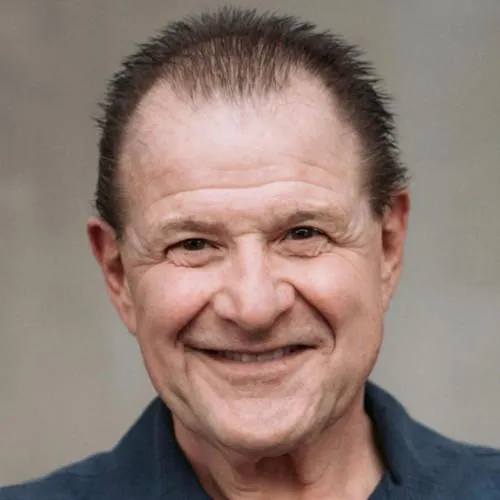
Mark Head
President
With 4 decades of combined experience in employee benefits consulting, wellness and health management, Head brings a unique combination of dynamic perspectives into a clear vision of where the future of health care is moving - and it's moving towards deeper human connection, awareness, and engagement...
Follow Us On
© 2025-2026 Benefit Personas, LLC. All Rights Reserved.