
The Human View™ Blog
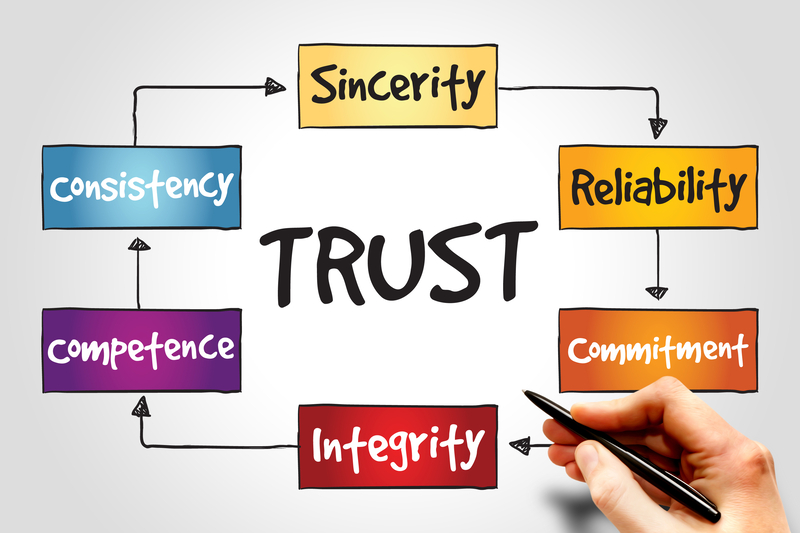
The Physics of Trust
Trust feels soft. Human. Emotional. Physics feels hard. Impersonal. Unforgiving.
But in every system that actually works—from power grids to families to healthcare—trust and physics behave in eerily similar ways. They accumulate slowly. They degrade quietly. And when they finally fail, they don’t fail politely.

Employee benefits, HR, and healthcare live right at this intersection.
For decades, we’ve treated trust as a vibe variable. Something you fix with better messaging, nicer portals, friendlier language. Meanwhile, we’ve treated healthcare economics as a spreadsheet problem—cost curves, utilization rates, trend lines. Both approaches miss the same thing:
Trust has constraints. And those constraints behave like physics.
You can borrow against trust for a while.
You can overdraw it quietly.
You can pretend it’s renewable when it isn’t.
But eventually, the system notices.
In physics, stress accumulates invisibly until it exceeds material tolerance. Steel doesn’t fail because someone “felt” like it should. It fails because load exceeded design. The same is true for trust in institutions.
Employees don’t disengage from benefits because they’re apathetic. They disengage because the system asks more of them—financially, cognitively, emotionally—than it gives back in clarity, care, or coherence.
Healthcare doesn’t feel broken because people are ungrateful. It feels broken because complexity keeps rising while trust-bearing capacity stays flat.
And here’s the uncomfortable parallel: Complexity without trust is brittle. Trust without integrity is performative.

"But it looks like progress..."
Benefits ecosystems have become marvels of logistical engineering—networks, vendors, platforms, integrations, APIs. From the outside, it looks like progress. From the inside, it often feels like friction.
When an employee doesn’t understand their benefits, that’s not a communication failure. It’s a systems failure. When they choose the “wrong” plan, that’s not irrational behavior. It’s signal overload under constraint.
Physics tells us that systems fail at their weakest point, not their strongest. Trust behaves the same way.
You can have world-class vendors and still lose trust if the lived experience feels confusing, extractive, or misaligned. You can have generous benefits on paper and still hemorrhage goodwill if people don’t feel seen in how those benefits are presented and supported.
This is why “engagement” can’t be coerced.
This is why nudges backfire when they ignore values.
This is why choice architecture without empathy feels manipulative.
Trust, like energy, must be conserved
It can’t be manufactured by slogans. It can’t be demanded by policy. It can only be earned by reducing friction, honoring human differences, and respecting limits.
And here’s the hopeful part.

Physics doesn’t just describe failure. It describes design.
When engineers understand constraints, they don’t fight them. They build within them. They distribute load. They add redundancy. They design for real-world use, not ideal conditions.
HR and benefits leaders can do the same.
Design experiences that assume people are tired, busy, anxious, and different from one another. Reduce cognitive load instead of adding features. Treat trust as infrastructure, not branding. Measure not just utilization, but felt clarity.
When trust is treated as a physical property of the system—something that can be strengthened or weakened by design choices—everything changes.
Engagement stops being a mystery.
Resistance stops being personal.
And care stops feeling transactional.
The last word
In the end, trust isn’t soft at all. It’s structural. Ignore its physics, and the system will eventually tell you—loudly—where the limits were all along.
~Mark Head
© 2026. All Rights Reserved.
Aspirations
“Trust can take years to build, and it can be destroyed in five minutes."
~ mdh

Mark Head
President
With 4 decades of combined experience in employee benefits consulting, wellness and health management, Head brings a unique combination of dynamic perspectives into a clear vision of where the future of health care is moving - and it's moving towards deeper human connection, awareness, and engagement...
Follow Us On
© 2025-2026 Benefit Personas, LLC. All Rights Reserved.