
The Human View™ Blog

The Bandwidth AI Will Give Back - Pt. 2 (C)
A version of this piece was first published in Voluntary Benefits Voice, the monthly publication of Voluntary Advantage.
In Part 1 of this post, we noted that "customization creates snowflakes." That no company can scale while they’re also trying to manage the snowfall.
And that there are 3 key trends across the benefits world within which AI is expressing, shall we say... differently?
First - the leverage-point for systems is moving from “who controls the data” to “how sophisticated and flexible is the configuration?”

Second - decision support (DS) is migrating beyond the O/E window.
Third - software is starting to act, not just inform.
And we looked at how those trends are affecting cosultants/brokers and benefit enrollment firms. Standardize to configuration, with true customization needs to be scoped and charged separately for, and you’ll have a documented, manageable engine where the client-specific nuances don’t live only in the brains of the account team!
Let's move on to token budgeting, and then wrap up.
What is this costing us?
The enterprise conversation about AI is shifting from “is this useful?” to “where is it actually worth the money?”
The token is becoming the operative cost unit, and the uncomfortable part is that a rising AI bill can mean real work is getting done — or it can mean the system is thrashing: re-reading context an assistant should already remember, retrying, or reaching for a frontier model on a task that doesn't need graduate-level compute.
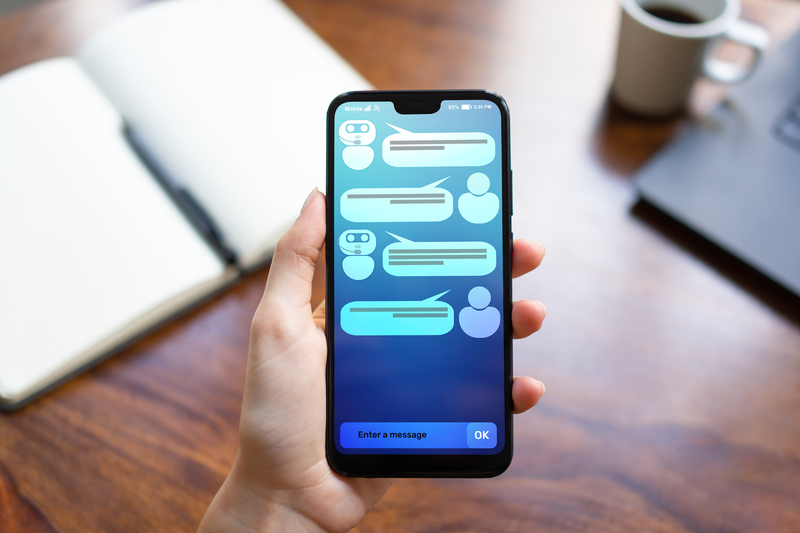
Anyone who's re-explained the same background to a chatbot for the fourth time has felt a version of this firsthand. At enterprise scale, that kind of friction tends to show up eventually as a real, and rising, line item.
For consultants and brokers, that shift is likely to surface less as a technical detail and more as a new item worth including in ordinary diligence.
How this is likely to show up
Every AI-powered tool now getting recommended or placed by a consultant — a carrier's decision-support engine, a ben-admin platform's assistant, a point solution's chatbot — has a cost structure sitting underneath the demo. Those costs are becoming part of due diligence, not just shunted over to IT.
A useful version of that question, ahead of a renewal or a recommendation, is whether a given assistant remembers an employee between sessions, or whether every trigger event effectively starts the conversation from zero. The second pattern tends not to just feel clunky to the employee — it costs more to run, and that cost will surface somewhere eventually: in vendor pricing, in degraded service during high-volume periods, or in a support experience that quietly erodes to protect margin.
Carrier impacts
Carriers sit inside this picture too, since a carrier's own decision-support and administrative AI carries the same cost dynamics — and a carrier absorbing rising AI costs quietly is likely to eventually show up in product costing, including commissions, platform fees, or service-level changes that a consultant/broker experiences indirectly, well before it's ever named explicitly as an “AI cost” issue.

This connects back to the “designer of choice architecture” position raised in Part 1. Designing that architecture increasingly seems to include a sense of what it costs a vendor to operate — per elected policy, per service case, per resolved question — alongside whether the tool exists at all. Consultants and brokers who build that instinct early seem better positioned to stand behind an “always-on” promise at renewal, rather than getting surprised with the fine print in front of a client.
The last word
We're not talking about due diligence becoming a technical audit. But it's a question that deserves to be posed as to how efficient agents and assistants are becoming, vs. just "doing more." A vendor with a good answer to that question is signaling something real about how they build; one without a ready answer is worth "discounting," regardless of how polished the demo is.
~ Mark Head
© 2026. All Rights Reserved.



Mark Head
President
With 4 decades of combined experience in employee benefits consulting, wellness and health management, Head brings a unique combination of dynamic perspectives into a clear vision of where the future of health care is moving - and it's moving towards deeper human connection, awareness, and engagement...
Follow Us On
© 2025-2026 Benefit Personas, LLC. All Rights Reserved.